
IoT Standards, Galore! Who Will Get Killed?
- May 23, 2016
- 5 min read
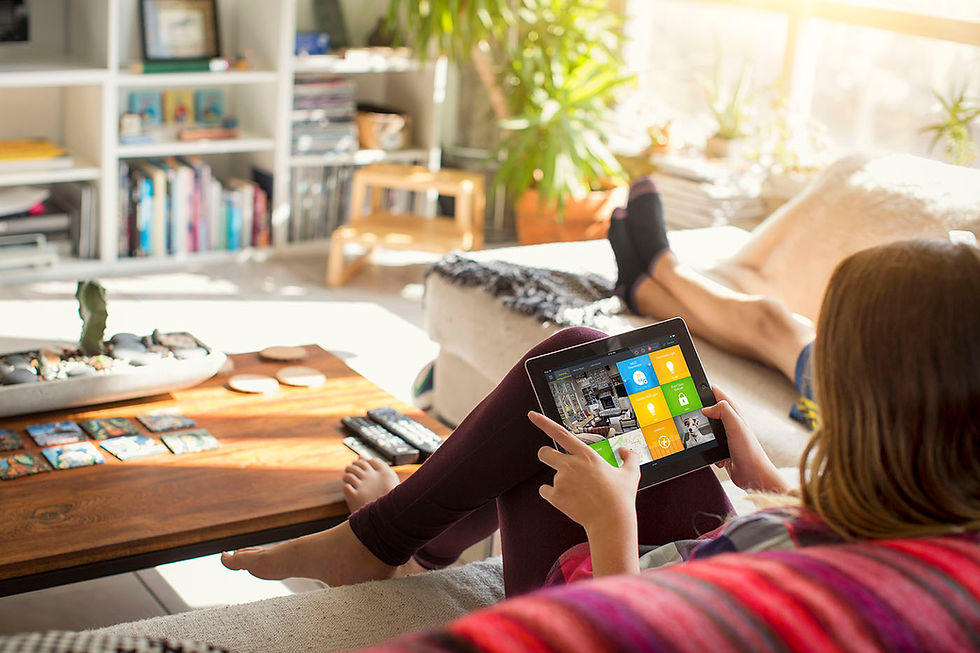
Suddenly, everything from washers to garage door openers are wired and interconnected. Your refrigerator will soon talk to your lamp and your doorbells. They will all have a direct line to your car, and to the health sensors in your smartphone. It’s Home Automation, the Internet of Things, call it what you will: For consumers, it’s a fancy name for the sensors embedded in our commonly used appliances and electronic devices, which will be connected to each other via WiFi, Bluetooth, or mobile-phone technology.
If The Jetsons’ fantasies of telepathic robot helpers and self-cooking meals represents the dream of the smart home, then we still must be living in the town of Bedrock. Appliance-makers have been trying to move the smart home forward for years now, but they've ended up stumbling over themselves and each other in the process.
Meet today's connected home: a collection of appliances and home gadgets that offer enhanced functionality but won’t work together in concert unless you happen to buy them all from the same brand — perhaps a LG fridge, a LG oven, a LG washer, and a LG dryer.
That's not very smart. Life would be so much easier if everyone stuck to only one standard— a standard that can do for appliances what Wi-Fi did for laptops, tablets, and the internet. Creating that is a surprisingly daunting task, though, and both making and agreeing on one is the point that’s tripped up manufacturers worldwide. Let’s explore things from the bottom-up to get a better understanding of the market.
Who's doing what?
Right now, there are dozens of IoT platforms positioning themselves as the 'one true' link. But it looks increasingly like a five-way battle between Apple HomeKit, Google Brillo, Samsung SmartThings, Wink and Belkin WeMo. There's also OpenHab, which is an open source project that's likely to connect devices to some or all of these platforms.
Who're the top contenders?
Brillo is so new that the only firm officially on board is the Google-owned Nest, whose Works With Nest programme connects devices from the likes of Philips, August smart locks and various smart plug providers.
Apple's HomeKit isn't much older, but the partners already include Ecobee and Honeywell thermostat, Schlage automated locks, Philips Hue lighting, MyQ garage doors, Insteon for a range of home automation devices, Incipio, iDevices and iHome plug sockets, Elgato Eve and Blue Maestro Tempo sensors, and Withings cameras.
SmartThings was snapped up by Samsung and claims to be compatible with more connected products than any other smart home company. In addition to Samsung products, partners include Honeywell, Sonos, Yale, Logitech and Osram. One small advantage for SmartThings: you'll be able to integrate Belkin WeMo products, which aren't currently supported by Wink.
Wink started as an app to connect Quirky to GE smart home appliances but has caught up and can play with many. You’ll find Chamberlian, Rachio, Honeywell, Kidde, Kwikset, Rheem, Dropcam, Bali, Leviton, Philips, Lutron, Schlage as Wink’s partner.
Belkin WeMo has been around for a while, but their home security hardware options are limited, with no door/window sensor, and only one motion sensor option. WeMo has a good lighting/switch offering, and to expand, you really need to get a smart-hub.
How do they work?
Apple's HomeKit and Google's Brillo are fairly new platforms, so the idea is that you'll buy a dozen of HomeKit or Brillo devices, add them to your network and control them with your phone. You'll be able to add non-supported devices with a bridge, which effectively translates between HomeKit/Brillo and non-compatible devices, but the emphasis is on the new standard. You'll be able to buy hubs that connect everything together, but hubs aren't essential for these two big boys.
However, hubs are essential for Wink and SmartThings, because their goal is to unite devices across multiple standards. They both support the Z-Wave and ZigBee standards, which are low-powered wireless networks great for reaching far-flung sensors in the smart home. The Wink hub also works with Bluetooth and Wi-Fi while the SmartThings hub connects to your wireless router.
WeMo requires no central hub because it only speaks WiFi. While Wi-Fi will be great for streaming in HD, it's bandwidth overkill for light switches and less robust than a ZigBee or Z-Wave mesh. And really, who wants a Wi-Fi lock or garage door given all the concerns with Wi-Fi security?

What are the downsides? If you thought Google would swoop in with its Brillo platform and solve all the ills that bedevil the home automation market, your faith has yet to be rewarded. Project Brillo was just announced at Google I/O 2015. So for now, your home is full of disparate pieces of tech that all do amazing things; they just don’t know they’re on the same team.
Meanwhile, with Apple being such a huge company, one can assume that there will be an increase in products available for HomeKit, making it a wise platform to choose simply knowing it will continue to grow thanks to the typical “Apple effect”. But HomeKit isn’t the right answer for Android or Microsoft phone users. Basically nobody uses anything other than Android devices (83% of the global market as of 2015), so my guess is it will work about as well with HomeKit as Android phones do with iPhones—which is to say, not at all.
And sure - Samsung SmartThings, which makes a $99 hub, is the closest thing to unifying your existing and new kit. But, the workarounds for non-natively supported devices isn’t for novices. Keep in mind that SmartThings is still not evolved enough to be dummy proof.
Wink is a little more restrictive, with the Apple-style logic that consumers will find it easier to use a closed but well-ordered system. This “benevolent dictator” approach means that the Wink app is a lot simpler than SmartThings, but still fails to support many popular devices.
Sharing of the spoils or winner takes all? Anyone who expects a clear answer to that is like a kid who gets up Christmas morning looking for a bunch of gifts under a tree. The fact is, it's too early to say what standard or protocol will become the glue that can turn a pile of cool gadgets into a system that runs your whole house for you. We suspect Apple will have the nicest system, Google the biggest, with Wink and Smart Things doing interesting things for comparatively smaller audiences. A lot more new systems are just starting to emerge, and though they may eventually work with each other and with older platforms, buying one of each and expecting harmony is still wishful thinking.
Conclusion
No doubt, the Internet of Things is some sort of a mess for now. It’s got serious issues with standardization and security that experts and the UN are trying to solve — same as it’s been been for the last decade.
Go ahead, IoT. Prove me wrong. Please. In the coming weeks and months we will see more and more companies trying to develop that one OS, that one communication platform or that one chipset, all to be used in the billions of connected devices to follow. And it won’t be long until those same consumers think, "What if I could connect all of these so that the heat, music, and lights come on whenever I return home from work?" We’re already building our smart houses piece by piece, but we’re still waiting to see who can put them together into a true smart home.
Skeptical about the idea of smarter homes? Let us know in the comments section below.
![[Infographic] 30 Social Media Tips for Trade Show](https://static.wixstatic.com/media/a19c3c_cb7cb642477e431c97b983146a5bea80~mv2.jpg/v1/fill/w_172,h_1000,fp_0.50_0.50,q_30,blur_30,enc_avif,quality_auto/a19c3c_cb7cb642477e431c97b983146a5bea80~mv2.jpg)
![[Infographic] 30 Social Media Tips for Trade Show](https://static.wixstatic.com/media/a19c3c_cb7cb642477e431c97b983146a5bea80~mv2.jpg/v1/fill/w_296,h_1724,fp_0.50_0.50,q_90,enc_avif,quality_auto/a19c3c_cb7cb642477e431c97b983146a5bea80~mv2.jpg)


Comments